
In the first four months of the current fiscal year, revenue collection has been more than Tk 50,000 crore less than the target. Meanwhile, Finance and Planning Minister Amir Khasru Mahmud Chowdhury has said that revenue collection will increase in the coming quarters. Various economic indicators will also gain momentum. He hopes that the outline of the new loan program with the International Monetary Fund (IMF) will be finalized by next January.
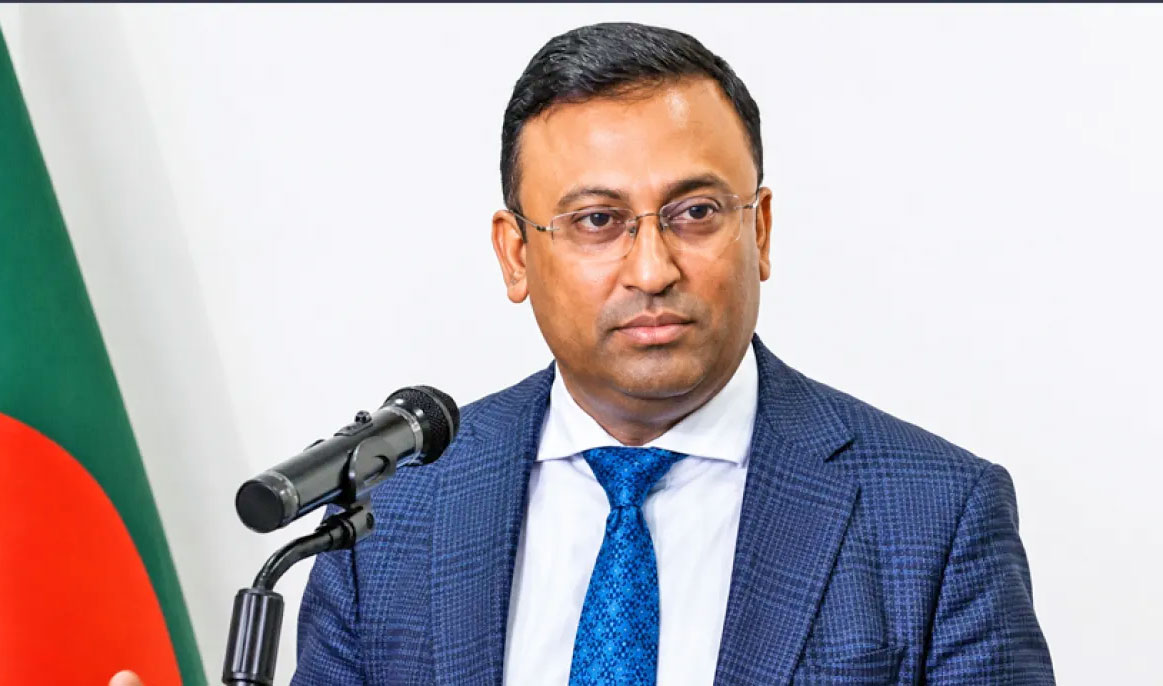
The finance minister made these remarks while talking to reporters at the National Board of Revenue (NBR) in Agargaon in the capital on Wednesday (November 11). The finance ministry gave his statement in a press release.
Amir Khasru Mahmud Chowdhury said that various economic indicators will gain momentum in the second, third and fourth quarters compared to the first quarter. Tax collection and overall growth are on a good trend. He said that the government has taken every step after careful consideration and keeping a specific plan in mind. There will be desired growth in GDP and revenue.
However, NBR's calculations show that the start of the fiscal year was not good. The revenue collection target for the first quarter of the current fiscal year 2026-27 (July-September) was Tk 1,34,396 crore. Tk 92,517 crore was collected. The deficit is Tk 41,879 crore, or about 31 percent of the target. Tk 91,390 crore was collected in the same period of the previous year. As a result, the collection increased by only 1.23 percent in a year.
The target was not met in any of the three main revenue sectors. The worst situation is in the value added tax (VAT). The target of VAT collection in the three months was 49,405 crore taka, but 29,348 crore taka was collected. The deficit in import-export duties was 12,136 crore taka. The deficit in income tax was 9,686 crore taka. However, compared to the same period of the previous year, income tax collection increased by 16 percent and import-level customs duties and taxes increased by more than 7 percent.
The situation did not improve in October either. According to NBR sources, in the four months of July-October, against the target of about 1 lakh 78 thousand crore taka, the collection was less than 1 lakh 28 thousand crore taka. That is, the deficit has exceeded 50 thousand crore taka.
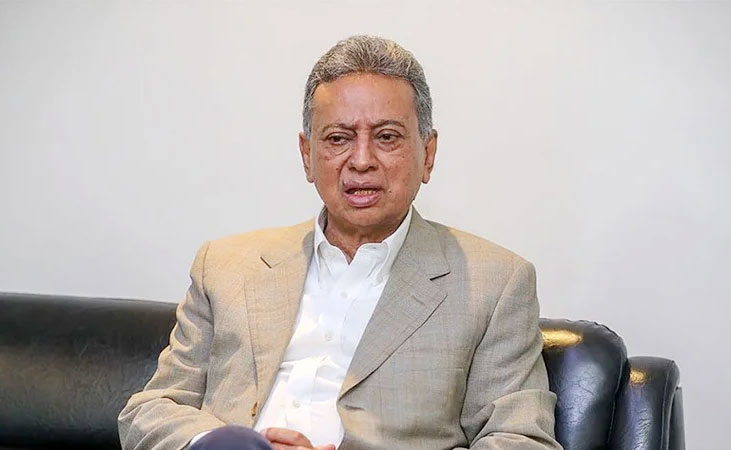
Former NBR chairman Mohammad Abdul Majid has cited two factors as the reason for the deficit. First, the slow pace of the economy. Second, the target has been set too high. Because of this, the collection picture looks weak.
Regarding the discussions with the IMF, the Finance Minister said, "The IMF loan is part of a comprehensive economic program. A working group is working on ongoing activities and structural issues. He hopes that there will be concrete progress on these issues and the outline will be finalized by next January."
The government is discussing a new three-year program with the IMF to replace the previous loan program. Its size is 450 to 500 million US dollars. Last October, the Finance Minister met with IMF Deputy Managing Director Nigel Clark at the IMF-World Bank annual meeting in Bangkok, Thailand. After the meeting, he said that the new loan will have conditions and they will have to be met. An agreement will be reached through discussions on some issues. The IMF has observations on increasing revenue collection, banking sector reforms and the tax-GDP ratio. At that time, the government expected that the program would be finalized by December this year.
The Finance Minister said on Wednesday that the wheels of the economy are being kept moving with financing from the World Bank, Asian Development Bank (ADB) and Islamic Development Bank (ISDB) as well as various bonds and sources, in addition to the IMF.
Regarding government expenditure, Amir Khasru Mahmud Chowdhury said, "The government is keeping a close eye on ensuring that every penny of the people's tax money is used properly. The projects are being taken in such a way that every investment yields proper results and new employment is created. He said that with the government's timely steps, there will be a balance between income and expenditure and ultimately the people will benefit from it.
Financial Mirror/AH