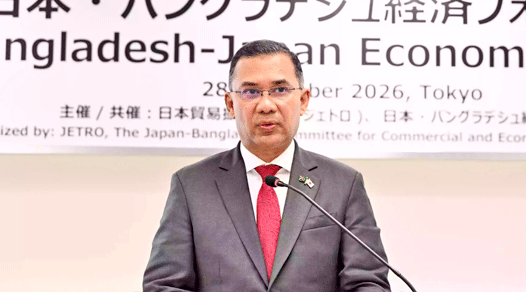
During an address at the Bangladesh-Japan Economic Forum Dialogue at JETRO headquarters in Tokyo, Prime Minister Tarique Rahman urged Japanese businesses to expand their footprint in Bangladesh across five key industries: automotive manufacturing, energy, tech and space innovation, high-speed rail and logistics, and agro-processing. He pledged comprehensive government reforms to streamline business operations and foster a more investor-friendly climate.
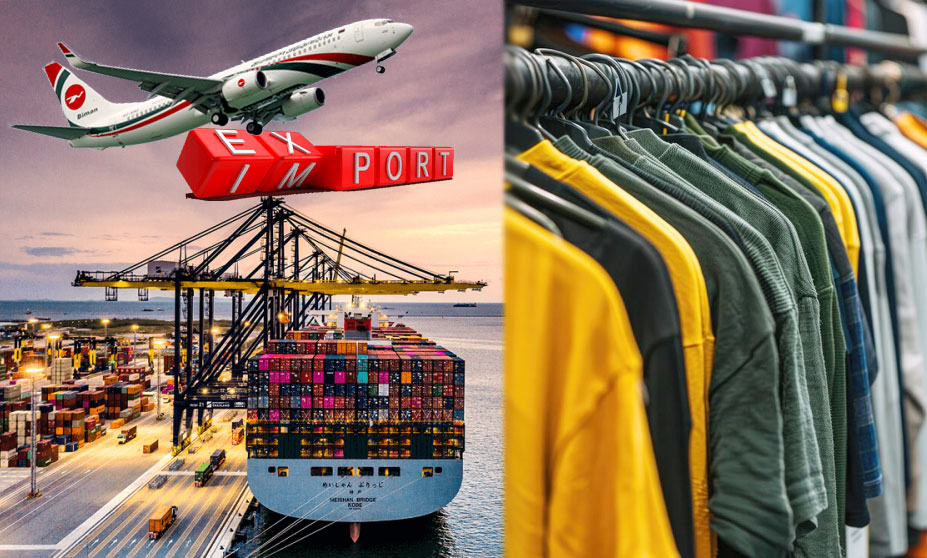
Highlighting the milestone Economic Partnership Agreement (EPA)—Bangladesh’s first-ever bilateral trade deal—the Prime Minister emphasized elevating ties into a robust economic partnership. While roughly 350 Japanese firms currently operate in Bangladesh, total foreign direct investment remains under $500 million, contrasting with bilateral trade figures where Bangladesh exported $1.36 billion and imported $2.16 billion from Japan last fiscal year. Under the new EPA, 7,379 Bangladeshi items will enter Japan duty-free, while Japanese exports such as steel, auto components, and electronics will gain preferential market access in Bangladesh.
Rahman pointed out Bangladesh's strategic market advantages, including a population exceeding 180 million, a youthful workforce with a median age of 27, and a surging consumer base projected to rank among the world's top ten by 2030. Addressing longstanding corporate feedback regarding energy reliability, infrastructure efficiency, customs transparency, and tax predictability, he assured investors of swift regulatory improvements: “Investors need confidence. Our job is creating the right environment to deliver both.”
Key sector highlights included:
-
Automotive: Welcoming Toyota’s plan to launch a vehicle manufacturing plant targeting full output by 2029, with complete state backing.
-
Energy: Calling for investments in LNG facilities, high-efficiency gas power, and renewables, alongside ongoing cooperation with JERA.
-
Technology & Space: Proposing a dedicated Bangladesh-Japan Technology Park for AI, cloud tech, robotics, and electronics, while seeking collaboration in satellite engineering and space science.
-
Logistics & Rail: Announcing a master plan for an elevated high-speed rail network linking major cities (Dhaka, Chattogram, Sylhet, Rajshahi, Khulna, and Barishal) and seeking Japanese investment for feasibility studies.
-
Agro-Processing: Encouraging investments in food processing, particularly within the Sumitomo-developed Bangladesh Special Economic Zone in Araihazar.
To support these economic ties, Prime Minister Rahman emphasized scaling up Japanese language education for young Bangladeshi workers, aiming to fill labor demands in both nations. He concluded by honoring Japan’s historical support since recognizing Bangladesh in February 1972, calling for a future defined by mutual prosperity and deeper collaboration.
Financial Mirror/AH