

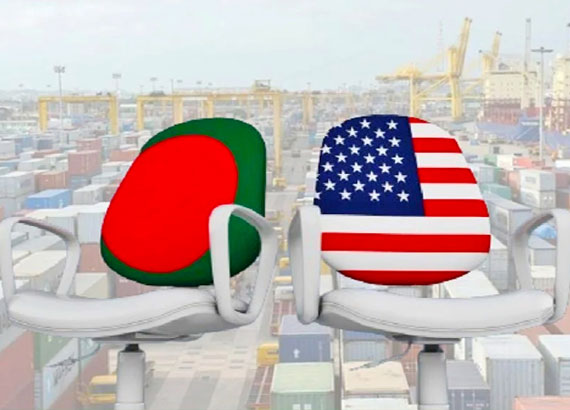
Relations between Bangladesh and the United States have long been based on trade, the readymade garment sector, development cooperation and diplomatic engagement. However, amid changes in the global economy, rapid technological advancement and the transformation of Bangladesh’s economy, there is now an opportunity to make bilateral relations broader and more multifaceted. Greater cooperation in business and trade, US investment, education, technology, industry, healthcare, agriculture, energy, and culture could help align the relationship with the emerging economic realities.
On February 9, 2026, Bangladesh and the United States signed a Reciprocal Trade Agreement. According to the Office of the United States Trade Representative (USTR), the agreement aims to expand market access, reduce trade barriers and create a more balanced economic relationship between the two countries.
New Opportunities in Trade
The United States is one of Bangladesh’s most important export markets. According to USTR data, bilateral trade in goods stood at approximately $11.8 billion in 2025. Of this amount, the United States imported goods worth $9.5 billion from Bangladesh, while Bangladesh imported approximately $2.3 billion worth of goods from the United States.
Readymade garments remain the mainstay of Bangladesh’s exports to the US market. However, there is a need to reduce this dependence in the future by expanding exports of leather and leather goods, footwear, pharmaceuticals, agricultural products, home textiles, light engineering products, IT and digital services, and other high-value goods.
The new trade agreement includes provisions to expand access to the Bangladeshi market for US industrial and agricultural products. Bangladesh has also made commitments to open its market further in areas including machinery, medical equipment, vehicles, ICT equipment, energy and agricultural products. At the same time, Bangladesh has made various commitments relating to labor rights, intellectual property, environmental protection, anti-corruption measures and trade facilitation.
In this context, one of Bangladesh’s biggest challenges will be to take advantage of the opportunities created by the agreement while simultaneously preparing domestic industries to compete effectively.
Major Investment Potential
Another important area for strengthening Bangladesh–US relations is foreign direct investment. Bangladesh has a large consumer market, logistics and infrastructure could become promising areas for investment.
However, tax incentives alone are not enough to attract investment. Faster approvals, reliable electricity and gas supplies, a simplified customs system, intellectual property protection, effective enforcement of contracts and a transparent regulatory framework are also essential. US assessments of Bangladesh’s investment climate have likewise identified certain limitations relating to infrastructure, implementation of incentives and the broader business environment.
New Horizons in Education and Research
Education can serve as one of the most effective bridges for strengthening long-term relations between the two countries. Every year, a large number of Bangladeshi students pursue higher education at universities in the United States. This relationship can be given a stronger institutional foundation.
Bangladesh and US universities could expand joint research, faculty and researcher exchanges, joint degree programs, scholarships and the establishment of research laboratories. Artificial intelligence, robotics, cybersecurity, medical science, agricultural technology, climate change and marine science could be important areas for joint research.
Partnerships between Bangladeshi and US universities could also help introduce modern curricula and research methodologies in Bangladesh, contributing significantly to the development of skilled human resources.
Technology and the Digital Economy
The combination of Bangladesh’s young population and the technological capabilities of the United States could give bilateral relations a new dimension. There is considerable potential for joint initiatives in software development, artificial intelligence, fintech, cybersecurity, cloud computing and digital services.
The new trade agreement also addresses issues related to cross-border data transfers and reducing barriers to digital trade. Greater access to the US market for Bangladeshi freelancers and software entrepreneurs could create new avenues for earning foreign currency. At the same time, if US technology companies establish research and development centers in Bangladesh, the country could benefit from both employment generation and technology transfer.
A New Path for Industrialization
In the long term, Bangladesh needs to move beyond an economy heavily dependent on the readymade garment sector and develop a more diversified industrial base. US technology and investment could play an important role in this transition.
Joint investment could be expanded in electronics, medical devices, pharmaceuticals, agricultural machinery, automobile components, environmentally friendly technologies and high-value light engineering products.
The development of such industries would not only increase exports but also strengthen the capabilities and technological expertise of local entrepreneurs.
Agriculture, Healthcare and Energy
There is significant scope for using US agricultural technologies, improved seeds, modern machinery, food preservation and processing technologies in Bangladesh. Cooperation between the two countries could also contribute to increasing Bangladesh’s agricultural exports.
Healthcare is another area with substantial potential for cooperation. Partnerships with US institutions and universities in cancer treatment, cardiovascular care, public health, telemedicine, pharmaceutical research and medical technology could help strengthen Bangladesh’s healthcare system.
In the energy sector, joint investment is possible in renewable energy, solar power, battery storage and energy efficiency. The new trade agreement also refers to commercial arrangements in sectors including agriculture, energy and civil aviation.
Literature and Culture as a Bridge Between Peoples
Alongside state-to-state and economic relations, strengthening people-to-people connections is equally important. Translating Bangla literature into English for publication in the United States, exchanges among writers and poets, film festivals, joint documentary production, and academic research on Bangla literature and culture could deepen cultural relations between the two countries.
Bangladeshi expatriates living in the United States can serve as an important bridge in this regard. Their business, educational, cultural and social activities can provide an effective platform for strengthening people-to-people connections between Bangladesh and the United States.
Challenges Ahead
The greater the potential of the relationship, the greater the challenges. Bangladesh will need to pursue continuous reforms in areas such as trade balance, tariff and non-tariff barriers, labor rights, intellectual property, environmental protection, corruption, investment security and bureaucratic complexity.
Under the new trade agreement, Bangladesh has made various commitments concerning labor rights, environmental protection, intellectual property, anti-corruption measures, trade facilitation and digital commerce. Therefore, realizing the benefits of the agreement will require not only commitments on paper but also the institutional capacity to implement them effectively.
A New Definition of the Relationship
If Bangladesh–US relations are viewed solely through the lens of garment exports and import figures, a large part of the potential will remain unexplored. The relationship of the future should be based on an integrated partnership encompassing trade, investment, technology, education, industry, healthcare and culture.
For Bangladesh, the immediate priorities should be to increase not only the volume of exports to the US market but also product diversification and value addition; to attract US investment while ensuring meaningful technology transfer; and to develop skilled human resources through education and research.
For the United States, Bangladesh can offer a large consumer market, a skilled and competitive workforce, and an important partner in regional supply chains.
With sound policies, mutual trust and practical initiatives, Bangladesh–US relations can move beyond a conventional commercial partnership and evolve into a long-term strategic partnership based on economic cooperation, technology and knowledge.
Business
Bangladesh–US Relations
PHOTO: TFM
Prospects for a New Partnership
Haider Hossain
Related News

Latest News

Most Read



Download Photo Card

Details in comment
box