

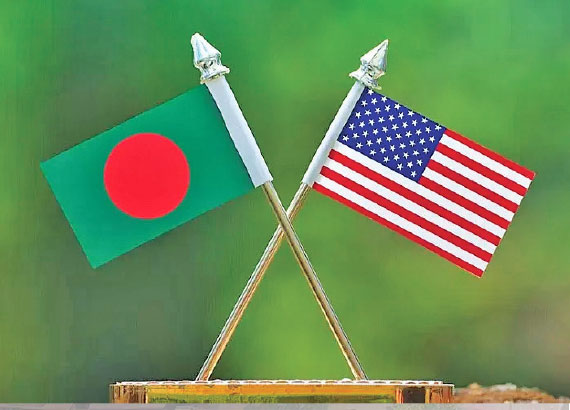
The recently concluded visit to Dhaka by the US Special Representative for South and Central Asia signifies more than just a routine diplomatic engagement; it reflects the broader scope of US foreign policy. This visit takes place at a critical juncture defined by shifting political realities, emerging geopolitical dynamics, and the evolving strategic rivalry between the United States and China.
Consequently, this visit conveys a highly significant message—not only for the bilateral relations between the two nations but also for the future diplomacy of the broader Indo-Pacific region. During his stay in Dhaka, Sergio Gor held a crucial high-level meeting with Prime Minister Tareq Rahman. He also engaged in a series of discussions with senior officials from the Ministry of Foreign Affairs and the government.
Detailed discussions were held during the meeting regarding the Bangladesh-US strategic partnership, economic cooperation, trade and investment, maritime and regional security, counter-terrorism, defense cooperation, and interests concerning the Indo-Pacific region.
Sources indicate that while the United States views Bangladesh as a stable, economically capable, and strategically important partner, practical challenges regarding trade and investment persist. Although there are indications of discussions concerning proposed military cooperation and security agreements—such as ACSA and SOFIA—US tariff policies and the creation of an investment-friendly environment remain the primary determinants for the expansion of Bangladesh’s trade.
Regarding the US stance on trade and investment issues, former diplomat Sakib Ali stated that major investments would not be secured through diplomatic visits alone, as American investors prioritize investment returns and a stable business environment. Former Ambassador Sakib Ali further told that Sergio Gor’s visit to Dhaka is not merely a routine or ceremonial one. The future depth of the relationship between the two countries will depend on the expansion of bilateral trade benefits, preferential access to the US market for ready-made garments and other products, climate finance, high-tech transfer, and the proper management of sensitivities regarding human rights and global geopolitics.
Meanwhile, although Bangladesh is currently one of the major exporters of ready-made garments to the United States, diversifying bilateral trade has become the need of the hour. Mahdi Amin, spokesperson for the Prime Minister’s Office, stated that—following up on Sergio Gor’s visit—a high-level business delegation comprising representatives from 25 leading US military and civilian industrial firms is arriving in Dhaka.
They will participate in joint meetings with various ministries and the Prime Minister to review investment prospects in the infrastructure, information technology, and energy sectors.
A clear statement has been issued by the Foreign Minister regarding this visit by the US Special Envoy. Foreign Minister Dr. Khalilur Rahman told reporters, “Bangladesh has consistently pursued a balanced and independent foreign policy grounded in national interests. Discussions with the US Special Envoy prioritized the expansion of trade, economic assistance, and maritime security. Ensuring safe shipping lanes in the Bay of Bengal and maintaining regional stability are our priorities.”
“We wish to further deepen our friendly strategic relationship with the United States; however, at the same time, we will maintain a balance in our relations with our neighbors and other development partners.”
According to sources at the Ministry of Foreign Affairs, both sides have agreed to enhance mutual partnership regarding maritime security in the Bay of Bengal, the prevention of human trafficking, counter-terrorism, and cybersecurity.
The Rohingya Crisis and Assured Funding: For nearly a decade, Bangladesh has set an exemplary precedent of humanitarianism by sheltering over a million displaced Rohingyas. However, this protracted crisis is placing severe strain on the country’s economy, local environment, and overall security. While extensive discussions took place during the visit regarding the crisis and securing funds for humanitarian aid, doubts persist concerning a long-term political solution.
Diplomatic experts believe it is unlikely that the United States or China will take direct, robust action to achieve a specific political solution to the Rohingya repatriation issue or the crisis itself. Bangladesh must seek a path to resolving this crisis through its own prudent bilateral and multilateral diplomatic capabilities. While the international community continues to provide financial aid to address the Rohingya crisis, there is no visible, concrete blueprint from the US to exert effective pressure on Myanmar.
Despite a positive US commitment to maintaining the flow of humanitarian aid, sustainable repatriation depends on political will.
According to geopolitical experts, Bangladesh’s importance within South Asia and the geostrategic Bay of Bengal basin is greater now than ever before. Integrating Bangladesh into the U.S. “Free and Open Indo-Pacific” strategy is a key objective for Washington. The United States seeks to maintain its influence in the Indian Ocean region by ensuring defense and maritime security. Its geopolitical location is of immense importance to the United States. Washington is particularly keen to deepen military and strategic ties with Dhaka, especially as China expands its access to the Bay of Bengal region through the Belt and Road Initiative (BRI) and other economic corridors. Regarding US observations concerning China, India, Pakistan, and Turkey, diplomatic sources indicate that Washington holds a very clear perspective on the multilateral regional dynamics involving Bangladesh. Washington is closely monitoring the growing infrastructure and economic agreements between Bangladesh and China; indeed, the discussions held by Sergio Gor reflected a distinct effort to understand the nature of the strategic and financial commitments Bangladesh made during its recent visit to China.
Although the United States regards India as a key strategic ally in the Indian Ocean region, Washington closely monitors Bangladesh’s sovereign decision-making and its efforts to maintain regional balance. While the dynamics of the relationship between New Delhi and Washington do influence Bangladesh, Dhaka seeks to uphold its own independent stance. The United States also attaches great importance to monitoring the defense balance in South Asia and the roles played by Türkiye and Pakistan in Middle Eastern and Eurasian politics.
If Bangladesh purchases modern military equipment from Turkey or thaws diplomatic relations with Pakistan, Washington views this through the lens of the delicate equation of regional influence.
Security expert Brig. Gen. (Retd.) Md. Hasan Nasir states that Washington is keen to have Dhaka on its side due to Bangladesh’s geopolitical importance. However, the primary test for Bangladesh’s foreign policy will be to maintain a diplomatic balance amidst the influence of major powers—China and the United States—as well as other influential South Asian nations, all while safeguarding its national interests. The speed at which the commitments made during Sergio Gor’s visit materialize will determine the future trajectory of Bangladesh-US relations.
Editorial
A New Turn in Bangladesh-US Relations
Moshe Srabon
Related News
Latest News

Most Read




Download Photo Card

Details in comment
box